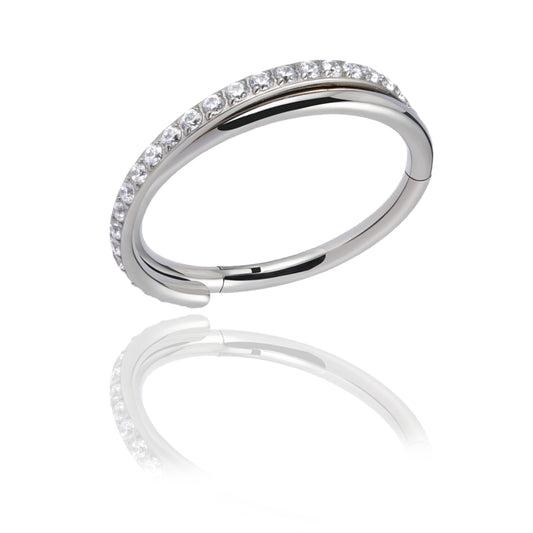
Why can hair bother a piercing?
Hair may seem harmless, but on a new piercing, it can become a source of irritation. It moves, rubs, sometimes wraps around the jewelry, and can slightly pull on the healing canal.
The most frequent situations are:
-
hair caught in jewelry, especially on a ring, a labret that is too long, or an embossed decoration;
-
repeated friction on a helix, conch, tragus, or flat;
-
shampoo, mask, oil, or hairspray residue around the piercing;
-
prolonged moisture when wet hair remains against the ear;
-
snagging with a comb, brush, towel, or hairdryer;
-
pressure during the night if hair pushes the jewelry or gets caught underneath.
These small traumas may not seem serious at the time, but if repeated daily, they can slow down healing, create irritation, or cause a small bump to appear around the piercing.
The right reflex: If your piercing becomes red, sensitive, or swollen after shampooing or styling, first look for the mechanical factor: tangled hair, friction, moisture, poorly rinsed product, or overly snag-prone jewelry.
How to wash your hair with a new piercing?
You can wash your hair with a new piercing, but you must avoid leaving hair products to linger around the jewelry. The goal is simple: wash your hair normally, while limiting friction, residue, and moisture on the pierced area.
Before shampooing
- Gently detangle your hair before showering to avoid pulling near the piercing once it's wet.
- Tie back long hair if it tends to get tangled around the jewelry.
- Prepare a clean compress or disposable tissue to dry the area after showering.
During shampooing
- Use a mild shampoo if possible, especially if the piercing is new.
- Massage the scalp with your fingertips, without scratching near the jewelry.
- Avoid applying masks, oils, leave-in treatments, or styling products directly to the pierced area.
- Rinse thoroughly to avoid leaving any residue around the piercing.
After shampooing
- Gently dry around the piercing with a clean compress or disposable tissue.
- Avoid rubbing with a bath towel: it can snag the jewelry.
- Do not leave wet hair pressed against a healing piercing.
- If necessary, use a hairdryer from a distance, on a warm or cool setting, without directing the air too strongly onto the area.
This routine prevents each shampoo from becoming a source of irritation. It is particularly useful for cartilage piercings, which often take longer to stabilize.
Styling, drying, and hairdresser: the right gestures
Washing is not the only risky moment. Snags often happen during styling: brush, comb, towel, straightener, hairdryer hood, clips, or elastics.
Daily
- Tie your hair loosely if your piercing is new.
- Avoid very tight hairstyles that pull on the ear or displace the jewelry.
- Prefer soft accessories: scrunchies, smooth clips, elastics without metal parts.
- Pay attention to strands around the helix, tragus, conch, and industrial.
At the hairdresser's
Always inform your hairdresser that you have a new or sensitive piercing. This is particularly important for an ear-area haircut, a blow-dry, coloring, bleaching, or a treatment that needs to sit for a long time.
Coloring, bleaching, sprays, hairspray, and styling products should not enter the piercing canal. If a hair service is planned shortly after a piercing, it is best to ask your piercer for advice before the appointment.
At night
At night, hair can get caught without you realizing it. If your piercing is new, tie it loosely and sleep on a clean pillowcase. For ear piercings, avoid sleeping directly on the pierced ear.
When jewelry worsens snags
Sometimes, the problem doesn't just come from the hair, but also from the jewelry. Jewelry that is too long, too mobile, highly decorated, or poorly suited to the location can snag more easily.
Signs that should make you check the jewelry:
- your hair often gets caught around the jewelry;
- the jewelry moves a lot when you style your hair;
- the area becomes sensitive after each shampoo;
- the piercing pulls, reddens, or swells after a snag;
- you are wearing decorative jewelry when the piercing is not yet stabilized.
In this case, ask your piercer for advice. They can check the size, shape, type of closure, and the appropriate time to change or adjust the jewelry.
For a well-healed piercing or when your piercer approves the change, choose comfortable, well-polished jewelry that is suitable for the area. You can explore our complete collection of ASTM F-136 titanium piercing jewelry, especially for ear piercings exposed to hair.
To go further
FAQ: hair and piercing
Can you wash your hair with a new piercing?
Yes, but you must avoid friction, rinse products well, and gently dry the area after showering. Shampoo, mask, or styling product residues should not remain around the jewelry.
What to do if a hair gets caught in my piercing?
Do not pull suddenly. Wash your hands, gently free the hair, and check that the jewelry has not moved. If the area becomes painful, red, or swollen, ask your piercer for advice.
Can I color my hair with an ear piercing?
It is best to avoid getting hair dye, bleach, or toner in contact with a new piercing. Inform your hairdresser and ask your piercer for advice if the area is still healing.
Should you tie your hair back during healing?
Yes, it is often preferable if your hair touches or snags the piercing. Tie it loosely, without pulling on the ear or compressing the jewelry.
Can jewelry snag hair more easily?
Yes. Jewelry that is too long, too mobile, ill-fitting, or very decorative can snag more easily. If this happens often, have a professional check the size and shape of the jewelry.
Conclusion
With a new piercing, hair can become a discreet but repeated source of irritation: snags, moisture, poorly rinsed shampoo, styling products, or friction during the night.
The solution is not to give up your hair care, but to adapt your habits: tie your hair back when necessary, rinse carefully, dry without rubbing, inform your hairdresser, and avoid products around the healing canal.
Finally, if snags are frequent, also consider the jewelry. Well-sized, well-polished jewelry that is suitable for your location can improve daily comfort. For this, you can consult our collection of ASTM F-136 titanium piercing jewelry.
Sources