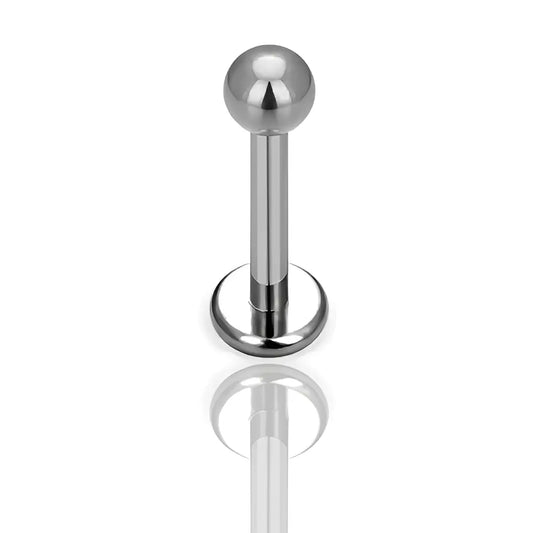
What is a tragus piercing?
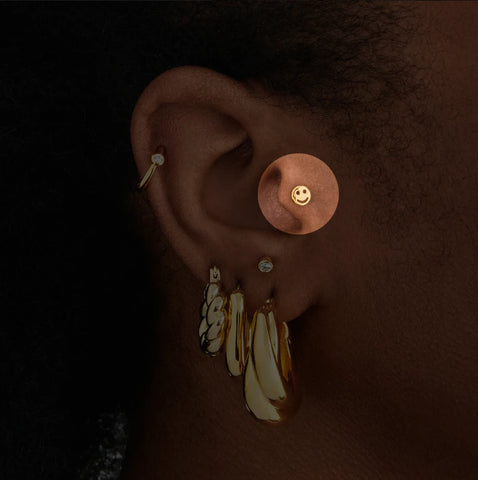
A tragus piercing involves piercing the small piece of cartilage located just inside the ear canal. Visually, it draws the eye without being too imposing, making it a great choice for those who want a discreet yet elegant detail.
The tragus is often chosen by people who want an alternative to the more classic lobe or helix piercings, while adding dimension to their ear. It integrates very well into a minimalist design as well as a more elaborate ear piercing.
However, not all body shapes allow for a tragus piercing to be performed under optimal conditions. In some people, the tragus may be too small, too thin, or not prominent enough to accommodate properly positioned jewelry.
That's why a consultation with a professional piercer is essential before making a decision: they will check if your anatomy is compatible with this piercing and will suggest the most harmonious placement.
INSTAGRAM / @studs
Do tragus piercings hurt? (pain and healing)
The tragus is one of the least painful cartilage piercings. You mostly feel a distinct pressure, a fairly strong pinch for about a second, rather than a prolonged pain. The pain is generally rated around 2 to 4 out of 10.
The technique used also plays an important role. A professional salon working with sharp, sterile and suitable needles (often referred to as "blade" or American needles) allows for a precise and quick procedure, making the experience more comfortable.
Conversely, using a catheter can sometimes be a little less invasive and therefore slightly more unpleasant. If you're interested in this topic, you can read our detailed article:
What is the difference between a piercing done with a "blade" and with a catheter?
Of course, pain remains subjective: everyone experiences it differently, depending on their sensitivity, fatigue, and stress level. To best prepare yourself, you can also consult our guide to the fundamentals of ear piercing, particularly the section:
" How to prepare before getting a piercing "
An important point: never trust a salon that uses piercing guns for tragus piercings or cartilage piercings in general. These guns are impossible to sterilize properly and can traumatize the cartilage, increasing the risk of complications.
"Pain is relative, but generally, a tragus piercing feels more like a brief pressure than actual pain."
Tragus healing
For healing, allow an average of 6 to 9 months for the cartilage to fully stabilize. The first few months are the most sensitive: the area may swell, redden, or react to slight pressure (pillow, headphones, phone). This is an average timeframe; each ear heals at its own pace.
Aftercare for a tragus piercing
Like all cartilage piercings, tragus piercings require regular and gentle care to heal properly. A good aftercare routine helps limit irritation and reduce the risk of complications.
Cleaning and hygiene
Clean your tragus piercing twice a day with sterile saline solution or a mild, pH-neutral soap, then rinse thoroughly with clean water. Avoid harsh products (alcohol, hydrogen peroxide, strong antiseptics), which can irritate the skin and slow healing.
Always wash your hands before touching your piercing. Avoid manipulating, rotating, or "playing" with the jewelry: this does not help it heal, quite the opposite.
Avoid irritation and trauma
To prevent complications, try to minimize friction and pressure on the area. Be careful with hairsprays, shampoos (especially blue and color-depositing shampoos), dyes, and excessive humidity, as these can irritate the piercing.
Also be careful with earphones, headphones and when holding your phone to your ear: these everyday actions can press directly on the tragus and cause chronic irritation.
Our tips for properly healing your piercing
Possible risks and complications
During the first few weeks, it is common to observe slight redness, moderate swelling, tenderness to the touch, or a clear or slightly whitish discharge. These are normal reactions to the healing process.
However, certain signs should alert you:
- very intense redness that does not diminish over time;
- significant heat to the touch, intense or throbbing pain;
- thick, yellow or greenish discharge;
- appearance of a very inflamed lump or a growth that is growing rapidly.
In these cases, it's best to consult your piercer promptly for an assessment. If you develop a fever or if the pain becomes severe, also contact a healthcare professional.
Because the tragus is exposed to friction (earbuds, phone, hair), it can also develop irritating bumps or growths in case of repeated trauma. The most important thing is not to panic, not to remove the jewelry yourself, and to seek professional advice.
When should you change your tragus jewelry?
To avoid unnecessarily prolonging the healing process, it's important to wait a sufficient amount of time before changing your tragus jewelry. Even though complete cartilage healing takes 6 to 12 months, a first jewelry change can generally be considered a little sooner.
As a general rule, it is recommended to wait at least 2 to 3 months before changing the tragus jewelry, and only if:
- The piercing no longer shows marked redness or pain to the touch;
- there is no abnormal flow;
- Your piercer confirms that the healing process allows it.
The cartilage continues to stabilize for several months after this initial change. This is why it is strongly recommended to have the first change performed by a professional, who can adjust the jewelry length and ensure everything is going smoothly.