In summary:
- Pain: varies from 1 to 8/10 depending on the area (the lobe being the mildest, the daith and industrial the most intense).
- Healing: from 6–8 weeks (lobe) up to 12 months and more for some cartilages.
- Sizes : thickness, length, diameter — see the size guide
- Price: between €20 and €100 depending on location and technique.
- Most accessible piercings: Lobe, Helix, Tragus and their variants.
- More advanced piercings: Conch, Daith, Flat, Industrial, Rook.
Why is there so much talk about ASTM F-136 titanium?
- ASTM F-136 is a standard that describes a Ti-6Al-4V ELI titanium, used for implants .
- It is a very popular option for first placement due to its stability and good tolerance (although this does not replace medical advice).
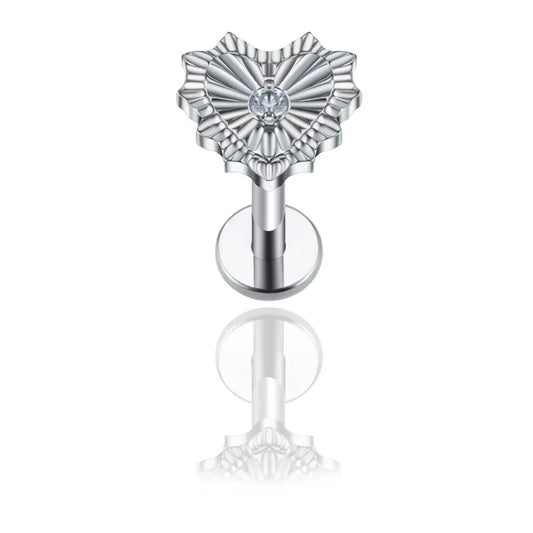
- At Naald, this is our standard: ASTM F-136 titanium jewelry to accompany all your piercings in the best conditions.
Ear piercing: the complete guide to placement, pain and healing
Ear piercings offer endless possibilities: from the discreet classic lobe to more structured piercings like the conch, daith, or industrial. Each has its own characteristics, pain level, healing time, and style. This guide is designed to help you understand each placement, but above all, to choose the one that best suits your face shape, style, and lifestyle.
To discover the symbolism and meaning of different ear piercings, you can also consult our article on the meaning of piercings .
Ear piercing pain
| Location |
Pain (1 to 10) |
| Lobe |
1–2 |
| Helix |
2–4 |
| Tragus |
2–5 |
| Conch |
4–6 |
| Daith |
6–8 |
| Flat |
4–6 |
| Rook |
6–7 |
| Industrial |
7–8 |
Since we know that pain is a major concern for many, rest assured: an ear piercing is never a long or unbearable pain. It's more like a distinct pressure, a quick little prick… and it's over in a flash.
Each area of the ear has its own sensitivity: some are completely calm, others start to tingle, and a few are a bit more intense. The image below allows you to visualize these differences at a glance using a simple color code. It's a good way to understand how your ear reacts and to choose a placement that suits you.

How to choose your ear piercing?
Choosing a piercing depends on several factors: your anatomy, your pain tolerance, the time you can dedicate to aftercare, and of course, the style you're looking for. If you're a beginner, the helix or tragus are often good first choices: they combine aesthetics, discretion, and relatively predictable healing.
If you're looking for something more discreet, the lobe or lower helix piercings remain safe bets. For a bolder look, the conch or daith piercings offer more presence. Finally, if you want to play with the lines of your ear, placements like flat, rook, or industrial allow you to create more graphic compositions.
Ear style and compositions
Each piercing can be integrated into an ear design in a unique way. Some people prefer a minimalist look with a few carefully chosen pieces, while others like to create a structured and vibrant "ear map." Thin rings add movement, flat labrets highlight a focal point, and more elaborate jewelry becomes a subtle visual marker.
By playing with volume, height, and alignment, it's possible to create a balanced and cohesive ear, whether discreet, elegant, or more assertive. Piercings like the inner conch often serve as a focal point, while the helix or flat piercing can add a light and sparkling touch.
Names of ear piercings
Here is a detailed presentation of each piercing, with their specific characteristics.

Lobe Piercing
The earlobe is often the first piercing people get: quick, simple, and relatively painless, it remains the most accessible location. Its popularity lies in its versatility: it suits all styles, from the most minimalist to the most flamboyant.

The pain is minimal: most clients describe a brief, very tolerable peak. Healing is relatively quick, generally between 6 and 8 weeks, provided basic aftercare is followed and unnecessary manipulation is avoided.
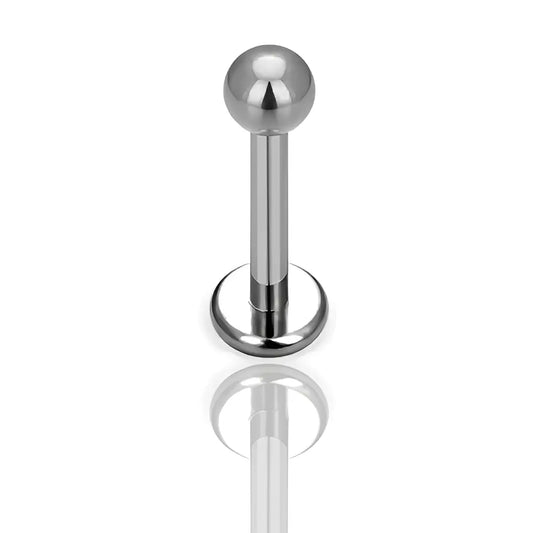
The choice of initial jewelry plays an important role. An ASTM F-136 titanium labret is highly recommended, as it minimizes irritation and offers very comfortable everyday wear. Once the lobe has healed, you can opt for a wider variety of jewelry: rings, studs, brighter stones, or more creative designs.
For detailed aftercare advice, also see our comprehensive piercing healing guide .
Helix Piercing
The helix is one of the most popular cartilage piercings. Placed on the upper outer part of the ear, it offers a discreet, elegant, and easily customizable look. It's also one of the first cartilage piercings recommended for beginners: it generally heals well and blends into all ear designs.
Piercing done at Nåald Annonay and jewelry available in the online shop
The pain is moderate: a marked but brief pressure is felt, followed by a sensation of heat for a few minutes. Healing takes between 3 and 6 months, depending on the individual's anatomy and the care provided.
The initial jewelry is almost always an ASTM F-136 titanium labret, ideal for stabilizing the cartilage. Once healed, the helix piercing allows for the wearing of both thin rings and more visible studs.
For aftercare (products, steps, mistakes to avoid) and to know when to consult a doctor, you can read our complete healing guide and the Ameli page (aftercare and when to consult) . For everything specific to the helix piercing (pain, healing, jewelry), also consult our helix piercing guide .
Tragus Piercing
The tragus piercing is located on the small cartilaginous area just in front of the ear canal. It's a discreet, sometimes slightly "secret" piercing that catches the eye without being too noticeable. It suits both minimalist designs and more elaborate ear piercings.

The pain is moderate: the area is firm but small, allowing for a quick piercing. Healing generally takes between 3 and 9 months, depending on the individual's anatomy. The tragus is easily affected by earphones and headphones, which can prolong healing if repeated pressure is applied.
The recommended jewelry for the piercing is an ASTM F-136 titanium labret. After healing, it can be replaced with a discreet ring or a small, shiny stud.
For detailed advice, you can consult our complete guide to tragus piercing .
Conch Piercing
The conch piercing is located in the center of the ear cartilage. It comes in two variations: the inner conch, which is more discreet, and the outer conch, which is more visible. This piercing immediately structures the ear and often becomes the focal point of a design.

The pain ranges from moderate to intense, depending on the thickness of the cartilage. Many describe a strong, but very brief, pressure sensation. Healing typically takes between 6 and 12 months, as the area is centrally located and subject to slight daily movement.
External Conch
An external conch piercing involves wearing a wide ring that encircles the ear. It's more visible and adds a modern touch. This type of jewelry is generally worn after the piercing has fully healed, as it's more mobile than a labret piercing.
To learn more, you can check out our complete guide to conch piercing .
Daith piercing
The daith piercing is located in the deep fold of the inner cartilage. Visually, it's a unique piercing that immediately draws attention, especially when worn with a ring. It's often chosen for its distinctive style and aesthetic depth.

The pain is more pronounced than with a helix or conch piercing because the area is thicker and less accessible. However, the piercing itself is still quick. Healing is lengthy and can take between 6 and 12 months because the internal cartilage shifts slightly every day.
The daith piercing is sometimes associated with the theory of "anti-migraine" piercings. Some people claim to experience relief, but there is no solid scientific evidence to support this effect. This piercing should be chosen for its aesthetic appeal, not as a treatment.
For detailed explanations, you can consult our complete guide to daith piercing .
Flat Piercing
The flat spot is located on the flat area of the cartilage, between the rook and the helix. It's a very popular placement for modern designs, as it allows for the addition of a highlight in the center of the ear.

The pain is moderate, often described as a fairly deep but rapid pressure. Healing takes an average of 6 to 9 months, sometimes a little longer if the area is subjected to a lot of stress from hair or headphones.
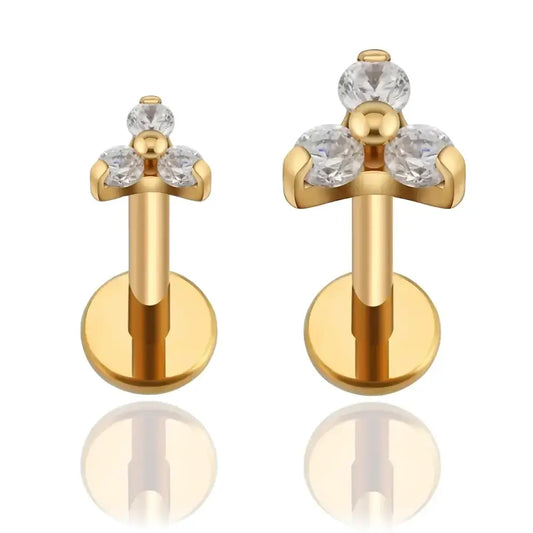
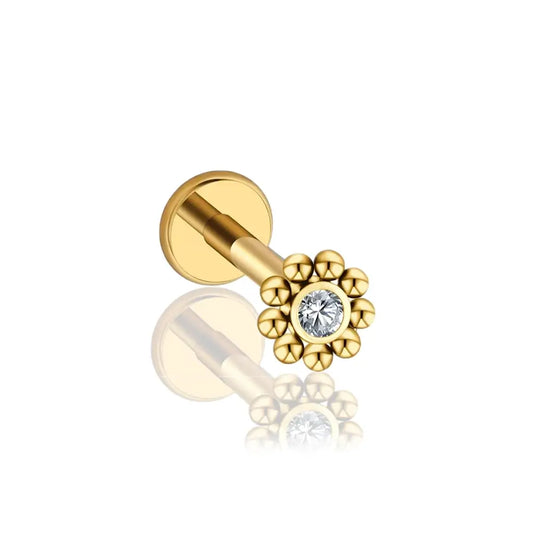
The flat piercing allows for a wide variety of jewelry to be worn: flat studs, floral designs, trinity, sparkling stones… It is an ideal piercing to add structure and character to an ear.
Rook Piercing
The rook piercing is done in the cartilaginous fold located above the daith. Visually, it immediately adds a unique touch to the ear. It is often chosen by those looking for a less conventional piercing, but without going for something too bulky.

The pain can range from moderate to severe depending on your body type, as the area is thick and requires a precise procedure. Healing typically takes between 6 and 12 months.
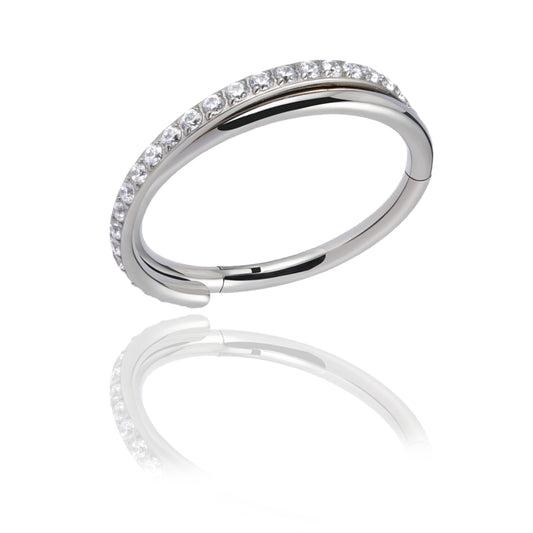
Once stabilized, the rook can accommodate various shapes of rings or small curved labrets. It is a very popular piercing for asymmetrical designs.
Snug Piercing
The snug is created in the inner cartilage, halfway between the conch and the helix. It is visually very distinctive and gives a strong graphic line to the ear.
This is one of the most sensitive cartilage piercings, as the area is firm and the piercing takes a while to complete. Healing usually takes several months, sometimes up to a year.
This piercing is recommended for people who want a highly visible piece of jewelry and who have suitable cartilage. It is not suitable for all ears: a consultation with a professional piercer is essential.
Industrial Piercing
The industrial is a double piercing connected by a straight bar. It passes through two points in the cartilage, usually the upper helix and a lower area. Visually, it's a very striking piercing, perfect for those who want a strong and assertive ear look.

The pain is greater than with a simple piercing because two piercings are required. Healing is a long and sensitive process, often lasting between 9 and 18 months. Even minor impacts or repeated pressure can slow down the stabilization.
This piercing requires a suitable anatomy: not all ears allow for a balanced industrial piercing. A consultation with a piercer is essential before considering it.
For a detailed guide, you can consult our complete guide to industrial piercing .
Piercing sizes: thickness, length, diameter…
The right size depends on the placement, your anatomy, and the type of jewelry (bar/ring). To help you avoid common mistakes (too tight, too long, wrong diameter), we've prepared a simple guide.
Consult the size guide (ears)
The price of an ear piercing
The price of an ear piercing varies mainly depending on the area pierced and the technique used.
Generally, expect to pay between €30 and €100, with lower prices for lobe piercings and slightly higher prices for cartilage piercings like industrials or daiths. This price includes the piercer's work, sterile equipment, and biocompatible jewelry suitable for healing, such as ASTM F-136 titanium.
The important thing is to choose a serious professional who prioritizes hygiene, comfort and your body shape, rather than basing your decision solely on the lowest price.
| Location |
Average price |
| Lobe |
20–40€ |
| Helix |
30–70€ |
| Tragus |
30–70€ |
| Conch |
30–50€ |
| Daith |
50–100€ |
| Flat / Rook |
40–70€ |
| Industrial |
60–100€ |
And then what? Healing of ear piercings
Regardless of the chosen placement, the key to a successful piercing lies in simple, regular, and appropriate aftercare. Cartilage healing takes time, and each ear reacts differently. Gentle cleaning, avoiding manipulation, and patience make all the difference.
To learn about the essential steps, recommended products and mistakes to avoid, you can read our complete guide to piercing healing .
| Location |
Healing time |
| Lobe |
6–8 weeks |
| Helix |
3–6 months |
| Tragus |
6–9 months |
| Conch |
6–12 months |
| Daith |
8–12 months |
| Flat |
6–9 months |
| Rook |
6–12 months |
| Industrial |
9–18 months |
Conclusion
Whether you're starting with a helix, lobe, conch, or rook piercing, or you want to create a more elaborate design, each ear piercing has its own unique characteristics and charm. Take the time to observe the shape of your ear, imagine the look you want, and don't hesitate to ask a professional for advice.
And if you wish to explore jewelry suitable for each location, you can browse our collection of ASTM F-136 titanium ear jewelry .
Care and when to consult a doctor.
Written by: Jean-Philippe - Proofread by: Chloé