Hypoallergenic Titanium Conch Piercing Jewelry
The conch piercing is located in the center of the ear cartilage and offers a subtle yet striking look. Well-chosen, the jewelry structures the inside of the ear without weighing it down and quickly becomes a key piece of your ear project.
At Naald, we have selected conch jewelry made from ASTM F-136 titanium, suitable for sensitive ears and for wearers who want a comfortable piercing for everyday life, both during healing and in the long term.
✨ At Naald, all our piercings are made of ASTM F-136 titanium and are tested and selected by a professional piercer.
| Parent category: |
All our ear jewelry |
| Size guide for conch |
Thickness (Gauge): 1.2 mm (18G)
Bar length: between 6 and 8 mm
Ring diameter: 10 to 12 mm
|
The conch, a central piercing in your ear project
Positioned in the center of the cartilage, the conch draws the eye to the inside of the ear and creates a very aesthetic focal point. It can remain discreet with a small minimalist labret, or become more prominent with a ring that encircles the cartilage. It is a piercing that fits equally well in a sober ear as in a more elaborate composition.
Depending on your other piercings (helix, tragus, lobe…), the conch can either balance the whole or play the role of a strong centerpiece in the ear.
What you will find in this collection
This collection gathers ASTM F-136 titanium conch piercing jewelry, designed to accompany the different stages of your piercing and your style desires:
-
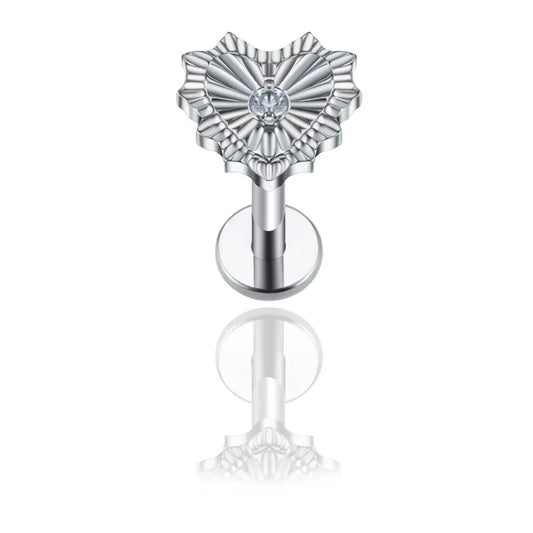
Minimalist labrets for a discreet and structured look in the center of the ear.
-
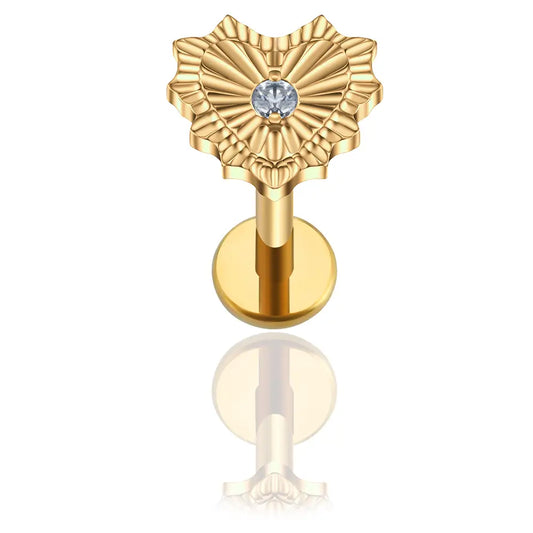
Set labrets (zirconiums, delicate motifs) to add sparkle without overloading the ear.
-
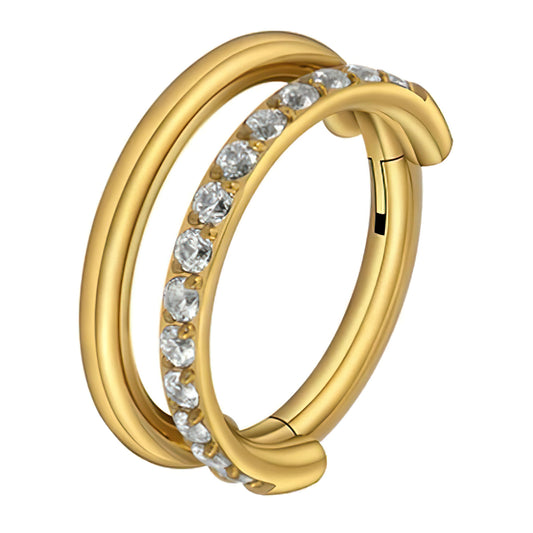
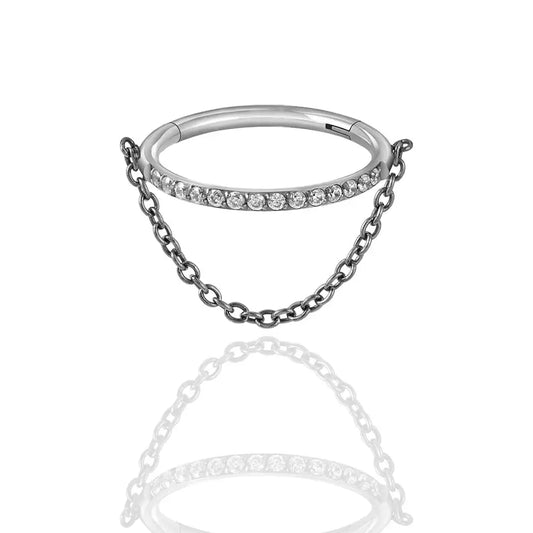
Smooth or textured rings to frame the cartilage and give a more pronounced look once the piercing is stable.
-
Natural titanium or PVD gold finishes to easily coordinate your conch with your other jewelry.
All these models share the same base: an implant-grade titanium, light and compatible with sensitive skin, to make the conch a piercing you can keep for a long time.
Creating a style around your conch
Once your conch is stable, you can integrate it into a complete ear project:
- A discreet labret in the center of the ear and more elaborate jewelry on the helix or lobe.
- A conch ring for a very structured ear, associated with more minimalist lobes.
- A conch + helix + tragus combination with coordinated finishes (all silver, all gold, or an assumed mix).
The goal is to be able to play with volumes and lines while maintaining optimal comfort thanks to titanium.
Pairing your conch with other ear areas
To build a harmonious ear, you can pair your conch with other piercings, staying with consistent materials and finishes. Discover for example:
FAQ – Conch piercing and titanium jewelry
What jewelry should I choose for a conch piercing?
For a healing conch piercing, an ASTM F-136 titanium labret is generally recommended. It remains stable, limits friction, and promotes calmer healing. A ring can be worn later, once the cartilage is sufficiently stable, to avoid irritation and excessive movement.
Can I wear a ring immediately after a conch piercing?
It is not recommended to wear a ring immediately after a conch piercing. The cartilage needs stability and no movement, which a titanium labret provides. The ring is best used once healing is advanced, on the recommendation of a professional.
How long does a conch piercing take to heal?
A conch piercing can take 6 to 12 months to heal, sometimes longer depending on lifestyle, care, and individual sensitivity. Cartilage heals slowly and can react to pressure, friction, or impact.
Is titanium suitable for a conch piercing?
Yes, ASTM F-136 titanium is the most recommended material for a conch piercing. Hypoallergenic, lightweight, nickel-free, and biocompatible, it reduces the risk of irritation or inflammation. It is the gold standard for cartilage piercings.
When can I change my conch jewelry?
Jewelry should be changed when your cartilage is stable. This usually occurs between 3 and 6 months, but verification by a piercer is highly recommended. Changing too early can cause irritation, pain, and delayed healing.
Does a conch piercing hurt?
A conch piercing is often described as a quick but more intense sensation than a lobe piercing because it goes through the cartilage. The pain is brief and tolerable when performed by a professional with ASTM F-136 titanium.
Can I sleep on a conch piercing?
It is strongly advised not to sleep on a conch piercing until the cartilage is stable. Pressure can cause swelling, irritation, and slow down healing. Sleeping on the opposite side or using a donut-shaped pillow is recommended.
My conch piercing is red or swollen, is this normal?
Slight redness and minor swelling in the first few days are normal. However, increasing pain, significant swelling, or thick discharge may indicate irritation or infection. In this case, it is best to consult your piercer or a healthcare professional.
How do I clean and care for a conch piercing?
Clean the area twice a day with a saline solution or physiological serum, without rubbing or turning the jewelry. Avoid harsh antiseptics, alcohol, and hydrogen peroxide, which irritate the cartilage. Keep the jewelry in place throughout the healing phase.