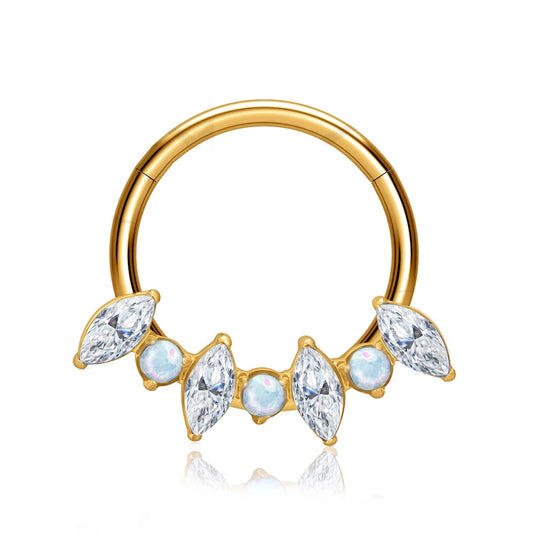
The Daith, an inner piercing with strong personality
Placed inside the ear, the Daith immediately draws the eye towards the center of the auricle. It brings a very architectural touch to the ear, while remaining relatively compact. Depending on the jewelry chosen, it can be discreet and elegant or, conversely, become a real statement piece in your ear project.
It is a piercing appreciated by those who like details visible up close, which are revealed when hair is lifted or when playing with volumes around the ear.
What you'll find in this collection
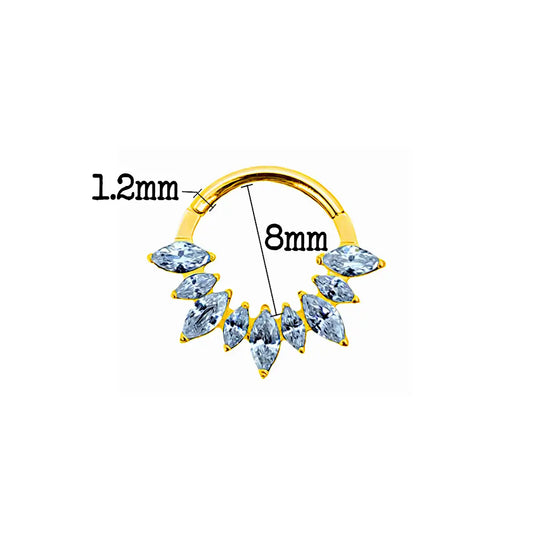
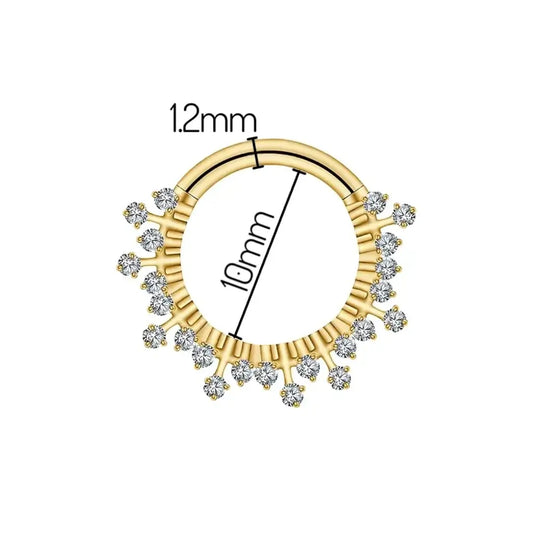
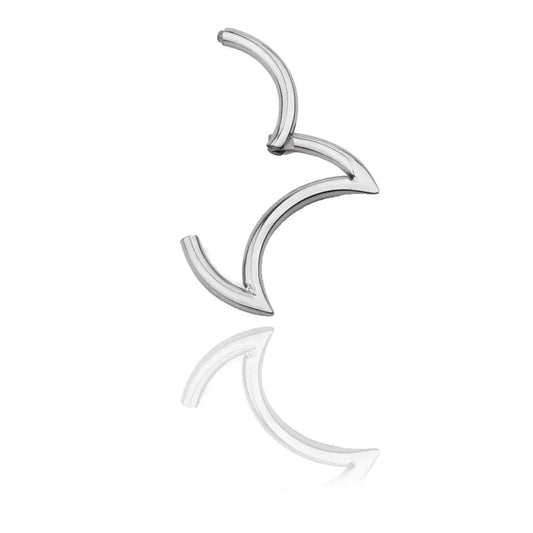
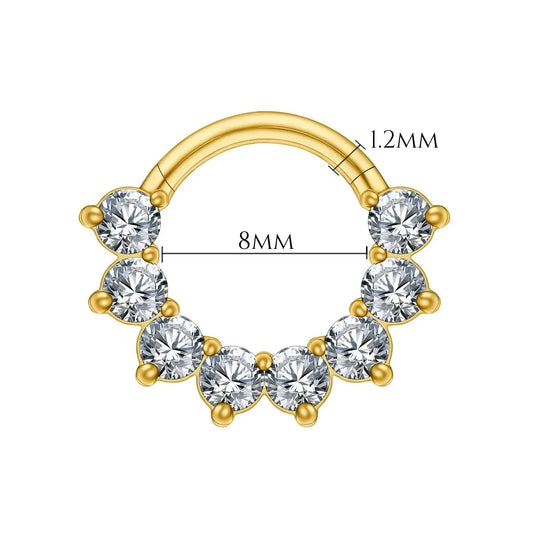
This collection features ASTM F-136 titanium Daith piercing jewelry in various styles:
-
Closed rings for a clean and refined look.
-
Segment rings for a neat and comfortable alignment.
-
Embellished models (stones, textures, patterns) to highlight the inside of the ear.
-
Natural titanium or PVD gold finishes to harmonize with your other piercings.
All these pieces of jewelry share the same foundation: implant-grade titanium, which is light, durable, and compatible with sensitive skin, for a Daith that is comfortable to wear daily.
Creating a style around your Daith
Once the Daith is stable, you can integrate it into a complete ear project:
- A simple ring for a subtle touch inside the ear.
- An ornate segment ring to draw the eye to the center of the cartilage.
- A Daith coordinated with the helix, conch, tragus, and lobes for a fully structured ear.
Titanium allows for a high level of comfort, even with jewelry you wear continuously.
Daith and migraines: putting things in perspective
The Daith is sometimes presented as an "anti-migraine piercing." If you're interested in the subject, we detail what to think about it in the FAQ below, to clearly distinguish the aesthetic dimension from any medical promise.
To complete your ear project, you can also explore our other collections:
FAQ – Daith Piercing and Titanium Jewelry
What jewelry should I choose for a first Daith piercing?
For a first Daith piercing, professionals recommend a small closed ring or an ASTM F-136 titanium segment ring. This type of jewelry limits internal friction and adapts well to the particular anatomy of the Daith. Titanium is preferred to reduce the risk of irritation and promote stable healing.
What is the best material for a Daith piercing?
ASTM F-136 titanium is considered the best material for a Daith piercing. It is hypoallergenic, nickel-free, lightweight, and biocompatible, which greatly reduces the risk of irritation. As the Daith is an internal piercing, a safe and high-quality material is essential to avoid complications.
Does a Daith piercing help with migraines?
To date, no scientific evidence proves that Daith piercing relieves migraines. Some people notice an improvement, others do not. It should not be considered a medical treatment, but only an aesthetic procedure. In case of migraines, always consult a healthcare professional.
How long does a Daith piercing take to heal?
Complete healing of a Daith piercing generally takes between 6 and 12 months. The inner cartilage heals slowly and can react to pressure, headphones, and friction. Good hygiene and gentle handling are essential to avoid prolonged irritation.
Can I sleep on a Daith piercing?
It is strongly advised against sleeping on a Daith piercing until the cartilage is stabilized. Constant pressure can cause swelling, pain, and delayed healing. Sleep on the opposite side or use a travel pillow with an opening to limit friction.
Can I wear headphones with a Daith piercing?
Immediately after the piercing, it is best to avoid in-ear headphones and tight headphones, as they press directly on the area. This can cause irritation and pain. Once the piercing is more stable, opt for headphones that do not touch the inside of the ear canal or choose a model that rests more on the outside.
My Daith piercing is red or swollen, is this normal?
Slight redness or swelling in the first few days is normal. However, if the area becomes very hot, if the pain intensifies, or if a thick fluid appears, this may indicate irritation or infection. If in doubt, consult your piercer or a healthcare professional.
What ring diameter should I choose for a Daith?
The most common diameter for a Daith piercing is between 6 mm and 8 mm, depending on your anatomy. The piercer will recommend the appropriate diameter during the piercing. To change jewelry, it is best to keep the same size or seek advice from a professional.
How to clean and care for a Daith piercing?
Clean your Daith once or twice a day with physiological saline or a saline solution, without rubbing and without turning the jewelry. Avoid aggressive antiseptics, alcohol, hydrogen peroxide, and cotton that can snag. Wash your hands before any contact and leave the jewelry in place until complete healing.