The right questions to ask a piercer
A good professional answers clearly. They should not make you feel "annoying" for wanting to understand what will be done to your body.
Before making an appointment
- Have you completed hygiene and sanitation training?
- How long have you been performing this piercing?
- Do you check anatomy before confirming the project?
- What jewelry do you use for the initial piercing?
- Is the jewelry included in the advertised price?
- Do you provide follow-up after piercing?
- What should I do if the piercing swells, bleeds, or gets irritated?
On the day of the appointment
- Why did you choose this placement?
- Is this area suitable for my anatomy?
- What is the approximate healing time?
- When should I come back for a check-up or jewelry change?
- What actions should I avoid during healing?
- What signs should alert me?
If you want to review the rules after placement, consult our guide: piercing healing, the rules to follow.
Warning signs: when is it better to leave?
Certain signs should make you think. Even if the price is attractive or the appointment is quick, it's better to postpone than take an unnecessary risk.
Bad signs
- the professional refuses to answer your questions;
- the price is unclear or changes at the last minute;
- the studio seems dirty or disorganized;
- the jewelry used does not have a clearly indicated material;
- the piercer does not check your anatomy;
- they accept all piercings without discussion;
- they minimize risks or promise "worry-free" healing;
- they pressure you to choose quickly;
- they recommend aggressive or outdated aftercare;
- they use a piercing gun;
- they provide no follow-up after the piercing.
Your instinct also counts. If you don't feel listened to, respected, or reassured, you have the right to leave. A piercing can wait.
Customer reviews, portfolio, and prices: how to interpret them?
Customer reviews
Google, Instagram, or Facebook reviews can indicate a trend: welcome, gentleness, pedagogy, hygiene, follow-up, quality of results. Don't rely on a single isolated review, but look for repetitions.
If several people mention the same positive point: gentleness, attentiveness, follow-up, cleanliness; it's encouraging. If several reviews mention lack of hygiene, no response, or poor care, be cautious.
The portfolio
A portfolio allows you to see the piercer's style, the precision of placements, and consistency with anatomies. Look to see if the piercings seem well-placed, well-aligned, and adapted to the ears, noses, navels, or lips presented.
For technical piercings, such as industrial, daith, rook, surface, or navel, the portfolio is particularly useful. It shows if the professional knows how to adapt their technique to each morphology.
The price
A clear price is a good sign. You should know what is included: procedure, jewelry, sterilization, follow-up, eventual change, healing check.
A very cheap piercing may hide low-quality jewelry, lack of follow-up, or less rigorous working conditions. Conversely, a high price should be explained: high-end jewelry, included follow-up, expertise, equipment, technical placement.
To remember: prices can be compared, but safety should not be negotiated. If the budget does not allow for choosing a serious professional, it's better to wait.
Should you choose a piercer near you?
A nearby piercer can be practical for follow-up, check-ups, downsizing, or a jewelry change. But proximity should never be your only criterion.
It's better to drive a few extra miles for a serious professional than to choose the closest studio if you have doubts about hygiene, jewelry, or follow-up.
The right compromise
- choose an accessible piercer for follow-up;
- check reviews and the portfolio;
- contact the studio before booking;
- ask your questions;
- visit the studio if possible;
- do not choose based solely on distance or price.
To go further
FAQ: How to choose your piercer?
How to know if a piercer is reputable?
A reputable piercer works in a clean studio, explains their protocol, uses sterile equipment, checks your anatomy, chooses appropriate jewelry, gives clear aftercare instructions, and remains available after the piercing.
What training should a piercer have?
In France, piercing professionals must have completed training in hygiene and sanitation rules and operate within a declared framework. This training does not replace technical experience, but it forms an essential health basis.
Is it a bad sign if a piercer refuses my piercing?
No, not necessarily. A refusal can be a sign of professionalism if your anatomy is not suitable, if the area is irritated, if the requested jewelry is not appropriate, or if the risk of rejection is too high.
Should you choose your piercer based on Google reviews?
Reviews can help, but they are not enough. Look at the general trend, photos, quality of responses, portfolio, price transparency, and how the studio answers your questions.
Should a good piercer follow up after the piercing?
Yes, follow-up is important. A good piercer should be able to answer your questions, check the piercing's progress, adjust jewelry if necessary, and refer you to a doctor if signs suggest an infection.
What jewelry should be used for a first piercing?
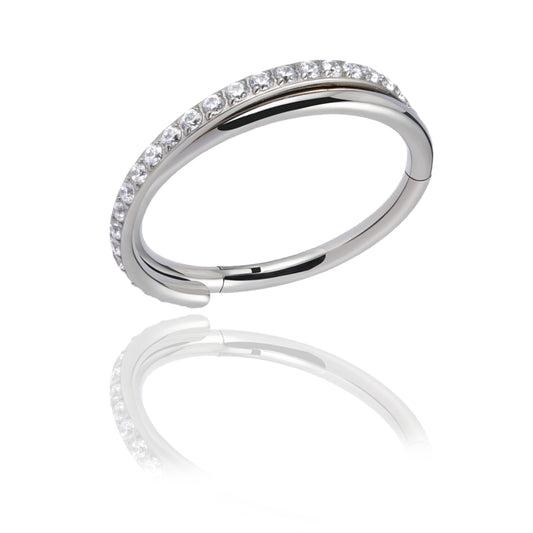
The jewelry must be adapted to the area, your anatomy, and the healing process. It must be made of a reliable material, have a smooth surface, a consistent size, and a secure fastening system. ASTM F-136 titanium is a very good option for many piercings.
Is the lowest price a good idea?
Not necessarily. A very low price can hide low-quality jewelry, little follow-up, or less rigorous conditions. It's better to choose a clear and justified price than a low but vague rate.
Can you visit a studio before getting pierced?
Yes, and it's even a good idea. You can observe the welcome, cleanliness, organization, ask your questions, and see if you feel confident.
Conclusion
Choosing your piercer is not just about finding someone who knows how to pierce. It's about choosing a professional capable of protecting your health, respecting your anatomy, placing suitable jewelry, and supporting you during healing.
Take the time to compare, ask questions, check hygiene, portfolio, initial jewelry, prices, and follow-up. A good piercer won't rush you: they will inform you, reassure you, and sometimes say no if the project is not viable.
Once your piercing has healed, or when your piercer approves the jewelry change, you can choose a comfortable and durable piece from our collection of ASTM F-136 titanium piercing jewelry.
Sources