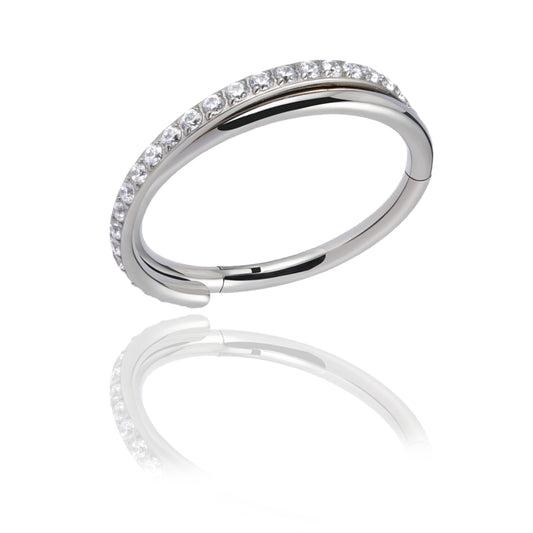
Why the material of a piercing jewel is important
A piercing is not just a simple earring placed on the skin. The jewelry passes through a scar canal, sometimes still fragile, and remains in prolonged contact with the tissues. The material must therefore be stable, well-tolerated, and suitable for the intended use.
A poor material or mediocre finish can lead to:
- redness or itching;
- a sensation of warmth or discomfort;
- persistent irritation;
- a reaction in people sensitive to nickel;
- premature wear of the jewelry;
- a more complicated healing if the piercing is new.
Conversely, a well-chosen piece of jewelry can make wearing it much more comfortable, especially on sensitive areas like the helix, tragus, conch, rook, daith, nose, navel, or nipple.
Comparative table of piercing materials
This table gives you a quick overview of the main materials used for piercing jewelry. It does not replace the advice of a piercer, but it helps avoid the most common mistakes.
| Material |
Strength |
Point of vigilance |
Ideal for |
| ASTM F-136 Titanium |
Lightweight, very well tolerated, no nickel in the alloy. |
More expensive than classic steel. |
Sensitive skin, initial piercing, daily wear. |
| ASTM F138 Implantable Steel |
Strong, durable, well-regulated if the standard is clear. |
Contains nickel in the alloy. |
Healed piercings and people who tolerate steel. |
| Solid 14k or 18k Gold |
Aesthetic, durable if the alloy is suitable. |
Must be solid, nickel and cadmium-free, and well-polished. |
Premium jewelry for stabilized piercings. |
| Niobium |
Very good tolerance, interesting alternative to titanium. |
Less common, sometimes heavier or more limited in choice. |
Sensitive skin, specific uses. |
| Borosilicate glass / quartz |
Inert, useful for certain plugs or specific jewelry. |
More fragile, less suitable for delicate or very exposed jewelry. |
Healed piercings, plugs, particular uses. |
| Silver |
Classic jewelry appearance. |
Can oxidize and irritate, not recommended during healing. |
Occasional decorative use on a well-healed piercing. |
| Bioplastic, acrylic, silicone |
Flexible or lightweight depending on the case. |
Variable quality, limited durability, not ideal for long-term use. |
Very specific cases, with professional advice. |
The most reliable materials for a piercing
ASTM F-136 Titanium: the simplest choice to avoid doubts
ASTM F-136 titanium is one of the most reassuring materials for piercing jewelry. It is lightweight, corrosion-resistant, very well tolerated by most skin types, and particularly interesting for people sensitive to nickel.
This is the material we favor at Naald, as it meets most needs: comfort, stability, durability, aesthetics, and daily safety.
If you're looking for reliable jewelry without spending hours comparing materials, you can start with our selection of ASTM F-136 titanium piercing jewelry.
Solid 14k or 18k gold: beautiful, but not just any kind
Gold can be a very beautiful option for piercing jewelry, provided it is solid, of good quality, well-polished, and suitable for prolonged contact with the skin. 14k or 18k gold is often cited as an interesting option, but caution must be exercised regarding the alloy composition.
Avoid simply plated, cheap gilded, gold-filled, or vermeil jewelry on a new piercing: if the surface layer wears off, the underlying metal can come into contact with the piercing channel.
Niobium: a good alternative, but less accessible
Niobium is less known than titanium, but it can be very well tolerated. It can also be anodized to achieve different colors. Its main drawback is its availability: fewer models, sizes, and designs are often found than in titanium.
Glass: useful in certain specific cases
Quality glass, such as borosilicate glass or quartz, can be used for certain specific jewelry, particularly plugs. It is appreciated for its inert quality, but it remains more fragile and less versatile than titanium for delicate everyday jewelry.
Materials to reserve or avoid
Surgical steel: acceptable in some cases, but not always the most reassuring
Surgical steel is very common in piercing jewelry. It can be strong, durable, and affordable, but the term "surgical steel" is sometimes used too vaguely.
To avoid cannibalizing our dedicated article, just remember this: if you are specifically hesitating between steel and titanium, read our complete comparison titanium or surgical steel for a piercing. Here, the main idea is to compare all materials and choose a reliable direction before purchase.
Silver: pretty, but rarely ideal for a new piercing
Silver is common in classic jewelry, but it is less suitable for new piercings. It can oxidize, scratch more easily, and become irritating in some cases. It is therefore preferable to reserve it for decorative jewelry worn occasionally on a perfectly healed piercing.
Plated, vermeil, gold-filled: caution with piercings
The problem with plated finishes is not just aesthetic. With friction, sweat, care products, clothing, or handling, the surface layer can wear down. The underlying metal can then be exposed.
For a new, sensitive, or easily irritated piercing, this is not a good compromise. If you like gold, opt instead for titanium jewelry with a quality PVD finish, or solid gold suitable for piercing.
Bioplastic, acrylic, silicone: uses to distinguish carefully
Flexible materials like bioplastic can be very useful in certain contexts, particularly during the healing phase of some cartilage piercings, when more flexible jewelry helps to reduce certain mechanical stresses.
The important point is not to put all flexible materials in the same basket. Their quality, use, and wearing duration must be adapted to the piercing, the area concerned, and the professional's recommendations. Bioplastic can therefore be relevant when chosen for a specific reason, but it should not be confused with low-quality plastics or fancy jewelry with an unclear composition.
The quick tip: if your piercing is new, sensitive, or reactive, avoid vague materials. Look for a standard, a clear material, a good finish, and an appropriate size. ASTM F-136 titanium remains the simplest choice to recommend.
Which material to choose according to your situation?
You just got pierced
Choose a material known for its tolerance, such as ASTM F-136 titanium, and jewelry perfectly suited to the area. The material matters, but the length, thickness, shape, and stability of the jewelry matter just as much.
You have sensitive skin
Avoid materials containing or releasing nickel, plated jewelry, and vague compositions. ASTM F-136 titanium is generally the most reassuring base to limit metal-related reactions.
Your piercing is well healed
You have more options, but that doesn't mean everything is suitable. A healed piercing can still react to jewelry that is too heavy, poorly polished, poorly sized, or made of a material your skin doesn't tolerate well.
You want gold-colored jewelry
Two options are generally more consistent: titanium jewelry with a quality PVD finish, or solid gold jewelry suitable for piercing. Avoid simply plated jewelry if the piercing is new or sensitive.
You want jewelry for everyday wear
Choose a durable, lightweight, and comfortable material. This is exactly the type of use for which ASTM F-136 titanium is interesting: it holds up well to daily wear, remains comfortable, and is suitable for many areas.
To find a reliable base depending on your placement, explore our complete collection: all our piercing jewelry.
Criteria to check before buying piercing jewelry
The material is essential, but it is not enough. Before buying, also check these points:
-
The standard or precise material: "ASTM F-136 titanium" is clearer than "surgical titanium."
-
The size: diameter, bar length, and thickness must match your piercing.
-
The shape: labret, ring, barbell, straight bar, clicker, or threadless depending on the area.
-
The finish: well-polished jewelry reduces friction and discomfort.
-
The type of clasp: internal thread or threadless are often more comfortable than external thread.
-
Compatibility with your piercing: beautiful but ill-fitting jewelry can quickly become irritating.
At Naald, our jewelry is designed to simplify this choice: clearly indicated material, visible sizes, silver or PVD gold finishes, and selection oriented towards the comfort of everyday piercings.
Ready to choose reliable jewelry?
Rings, labrets, barbells, straight bars, ear jewelry, nose, navel, or nipple: find our ASTM F-136 titanium jewelry in one collection.
View all our piercing jewelry
To go further
FAQ: Piercing Jewelry Material
What is the best material for piercing jewelry?
For most situations, ASTM F-136 titanium is the most reassuring choice: it is lightweight, durable, well-tolerated, and suitable for sensitive skin. For a new or fragile piercing, it is generally the simplest and most preferred base.
What material should I choose for a new piercing?
For a new piercing, choose a material suitable for initial placement, such as ASTM F-136 titanium, with a size and shape approved by a professional. Avoid silver, plated materials, acrylic, and jewelry with unclear compositions.
Is surgical steel suitable for piercings?
Surgical steel can be suitable in some cases, especially for a healed piercing, but its quality must be precise. A simple mention of "surgical steel" is not always sufficient. If you are hesitating between steel and titanium, consult our dedicated article on the subject.
Is gold a good material for a piercing?
Solid 14k or 18k gold can be suitable if the alloy is of good quality, nickel-free and cadmium-free, and if the jewelry is well polished. However, plated, vermeil, or gold-filled jewelry should be avoided for new or sensitive piercings.
Should silver be avoided for a piercing?
Silver is not recommended for a new piercing, as it can oxidize, scratch, and irritate tissues. It can eventually be worn occasionally on a perfectly healed piercing if you tolerate it well.
Is PVD gold titanium suitable for sensitive skin?
Yes, if the base of the jewelry is ASTM F-136 titanium and the PVD finish is of good quality. This allows for a golden appearance while retaining the benefits of a titanium base.
Conclusion
Choosing the right material is a crucial pre-purchase step. Before only considering style, check if the jewelry is suitable for your skin, the condition of your piercing, and your daily use.
For a simple, reliable, and durable choice, ASTM F-136 titanium remains the most reassuring material for most piercings, especially if your skin is sensitive or if you want to avoid unpleasant surprises.
You can now move from choosing the material to choosing the jewelry: discover our collection of ASTM F-136 titanium piercing jewelry, designed to combine comfort, safety, and elegance.
Sources