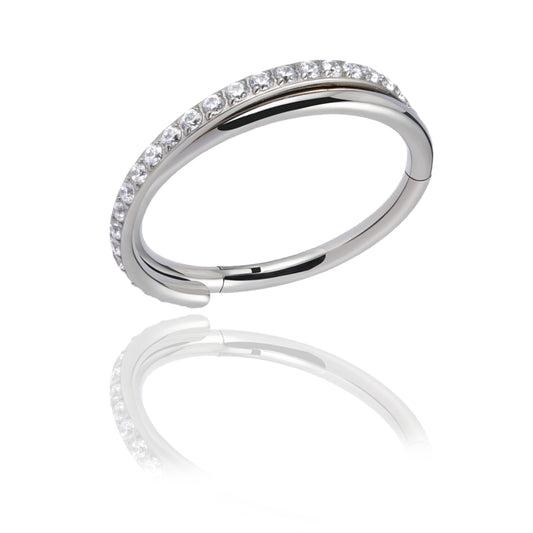
What to do after snagging your piercing?
The first instinct is not to panic. A piercing can be sensitive after an impact, especially if it's new, but the most important thing is to avoid making the situation worse.
1. Do not pull or twist the jewelry
After a snag, avoid constantly checking, twisting the jewelry, or moving it to "see if it's okay." The channel has already been traumatized: the more you manipulate it, the more you risk perpetuating the irritation.
2. Wash your hands before any contact
If you need to touch the area, do so only with clean hands. This also applies if a hair, thread, or clothing fiber is caught around the jewelry.
3. Clean gently if the area has bled or been soiled
If the snag caused minor bleeding or if the area came into contact with a towel, clothing, or a questionable surface, clean gently according to your piercer's recommendations, for example with a sterile saline solution.
Avoid alcohol, hydrogen peroxide, essential oils, and harsh cleansers: after an impact, the skin needs to be soothed, not stripped.
4. Observe for 24 to 48 hours
Slight sensitivity can be normal after a snag. However, if the pain increases, if the area becomes hot, very swollen, very red, or if a yellow, green, or foul-smelling discharge appears, seek professional advice.
The right reflex: after a snag, clean only if necessary, then leave the piercing alone. The worst reflex is often to touch, twist, or test the jewelry multiple times throughout the day.
What are the risks after a piercing snag?
A snag can simply cause temporary pain. But on a new or fragile piercing, it can also create small traumas that slow down healing.
| Situation |
What it can cause |
Good reflex |
| Minor isolated snag |
Brief pain, slight redness, sensitivity for a few hours. |
Clean if necessary, then monitor without manipulating. |
| Repeated snags |
Persistent irritation, irritation bump, slower healing. |
Identify the cause: hair, clothing, towel, overly long jewelry. |
| Strong tug |
Bleeding, displacement of the jewelry, more pronounced pain. |
Have it checked if the pain persists or if the jewelry seems displaced. |
| Jewelry ripped out or almost out |
Wound, risk of infection, rapid closure of the channel depending on the area. |
Do not force it back in. Contact a professional quickly. |
The most affected areas are often ear piercings with hair and sweaters, the navel with pants or belts, the nipple with clothing, the eyebrow with towels or helmets, and surface piercings with daily friction.
If a bump appears after several snags, it could be irritation or a hypertrophic scar. To better differentiate, consult our guide: keloid, outgrowth, or irritation after a piercing.
How to avoid snagging your piercing?
You can't eliminate all risks, but a few habits significantly reduce snags.
Clothes, sweaters, and scarves
- Put on and take off sweaters slowly, especially with a helix, tragus, rook, or eyebrow piercing.
- Avoid tight collars, lace, thick knits, and snag-prone fabrics during the first few weeks.
- For navel or nipple piercings, avoid clothing that rubs or directly compresses the area.
Hair, towels, and styling
- Tie up your hair if your piercing is new or snags often.
- Dry around the jewelry with a clean compress or disposable tissue rather than a thick towel.
- Inform your hairdresser if you have a new or sensitive piercing.
To learn more about this specific point, read our dedicated article: hair and piercing.
Sports, helmets, headphones, and glasses
- Avoid contact sports or protect the area if your piercer has advised you to.
- Be careful with motorcycle helmets, headphones, glasses, hats, and headbands.
- Regularly clean objects in close contact with the piercing: phone, headphones, glasses frames.
Night and sleep
- Do not sleep directly on a new piercing, especially cartilage.
- Keep a clean pillowcase.
- For ear piercings, a travel pillow can help avoid direct pressure on the piercing.
When jewelry promotes snags
Sometimes, the problem isn't just your routine. It comes from the jewelry itself.
Jewelry can snag more easily if it is:
-
too long: it moves, twists, and gets caught more easily in hair or clothing;
-
too ornate: reliefs, chains, pendants, or protruding shapes can snag;
-
poorly suited to the area: a ring or bar might be comfortable in one place but not another;
-
poorly finished: a rough surface, an external thread, or a poorly closed clasp can irritate;
-
too small: it can compress tissues and create another form of discomfort.
If your piercing is still healing, do not change the jewelry yourself. Ask your piercer if an adjustment, downsize, or simpler piece of jewelry is necessary.
If your piercing is healed and you are looking for more comfortable everyday jewelry, choose a reliable material, a well-polished surface, and a suitable shape. You can consult our complete collection of ASTM F-136 titanium piercing jewelry.
Need less snag-prone jewelry for everyday wear?
Rings, labrets, barbells, straight bars, ear, nose, navel, or nipple jewelry: choose ASTM F-136 titanium jewelry suitable for your placement.
View all our piercing jewelry
To go further
FAQ: snagged piercing
Is it serious to snag your piercing?
Not necessarily. A minor isolated snag can simply cause temporary pain or redness. However, if it happens repeatedly, if the pain increases, or if the jewelry seems displaced, it's best to have the piercing checked.
What to do if my piercing bleeds after a snag?
Wash your hands, clean gently according to your piercer's recommendations, then leave the area alone. If the bleeding is heavy, if the jewelry has moved, or if the pain persists, seek professional advice.
Should I remove the jewelry after a snag?
No, not without advice. Removing the jewelry can complicate the situation, especially if the piercing is new or irritated. If the jewelry is ripped out, displaced, or too painful, contact a piercer or healthcare professional quickly.
Why does my piercing keep snagging?
The cause may be hair, clothing, towels, helmets, or accessories. But the jewelry can also be a factor: too long, too mobile, too ornate, or poorly suited to the area.
What jewelry should I choose to limit snags?
Choose well-fitted, well-polished jewelry that is suitable for your piercing and lifestyle. For a healed piercing, ASTM F-136 titanium jewelry with a simpler shape can improve everyday comfort.
Conclusion
A snagged piercing can happen to anyone. The most important thing is not to pull, not to manipulate unnecessarily, and to monitor its development in the hours that follow.
To prevent it from happening again, observe your daily life: clothing, hair, towel, helmet, sports, sleep, jewelry that is too long or too ornate. Often, a few adjustments are enough to significantly reduce snags.
And if the jewelry is the cause, choose a more comfortable base: well-sized, well-polished jewelry, made from a reliable material. Discover our ASTM F-136 titanium piercing jewelry to find a model better suited to your daily use.
Sources