Can you get pierced during pregnancy?
Generally, it's not recommended. During pregnancy, the body already has a lot to manage: hormonal changes, more reactive skin, volume variations, fatigue, a mobilized immune system, and sometimes less predictable healing.
Even if an ear or nose piercing seems simple, it's still a break in the skin. There's always a risk of irritation, infection, poor healing, or a reaction to the jewelry.
The safest approach is to wait until after pregnancy, then seek advice from a professional piercer once your body has stabilized.
Key takeaway: during pregnancy, it's best to avoid adding a new healing process to your body. If your project is important to you, save it for later and prepare it with a professional.
Should you remove your piercings during pregnancy?
Not necessarily. If your piercing is old, well-healed, comfortable, and not under tension, it can sometimes stay in place.
However, you need to monitor it more closely. During pregnancy, certain areas change a lot: belly, breasts, hips, skin, general sensitivity. Jewelry that previously caused no problems might become uncomfortable.
Signs that should make you react
- the jewelry pulls or compresses the skin;
- the area becomes red, warm, or painful;
- the piercing itches, stings, or swells;
- the hole appears to be enlarging;
- the jewelry snags more easily;
- unusual discharge appears.
If any of these signs appear, do not force it. Seek advice from your piercer, midwife, or a healthcare professional, depending on the situation.
Navel piercing and pregnancy
The navel piercing is most affected by changes during pregnancy. As the belly rounds, the skin stretches, and the jewelry can start to pull.
If the piercing is recent, irritated, or not fully healed, it's generally riskier to keep it. If the piercing is old and comfortable, it can sometimes remain for a few months, but you need to monitor its evolution.
What to do if the jewelry pulls?
- do not force the jewelry to stay in;
- avoid clothes that compress the navel;
- seek advice before switching to flexible jewelry;
- remove the jewelry if the skin becomes too stretched, red, or painful;
- consult if the area becomes irritated or appears to widen.
Some flexible pregnancy jewelry can be useful in certain cases, but they are not mandatory and don't suit all situations. The most important thing is not to let jewelry pull on the skin.
Nipple piercing, pregnancy and breastfeeding
Nipple piercings require special attention during pregnancy and breastfeeding. Breasts can increase in volume, become more sensitive, and barbells can become too short or uncomfortable.
If the jewelry pulls, compresses, or causes discomfort, seek advice quickly. It may be necessary to change the barbell length or remove the jewelry depending on the evolution.
And during breastfeeding?
If you are breastfeeding, nipple jewelry must be removed before each feeding. This avoids the risk of injury, discomfort for the baby, or accidental ingestion/inhalation if a part of the jewelry unscrews.
The area must remain clean, and it's best to discuss it with your midwife, doctor, or a lactation consultant if you have any doubts.
Intimate piercing and childbirth
Genital or intimate piercings are generally removed before childbirth, according to the medical team's instructions. This is a matter of safety, hygiene, and managing care during labor.
In the event of a C-section, some jewelry may also need to be removed for medical reasons. The simplest approach is to discuss it beforehand with your midwife or maternity ward to avoid a rushed decision on the day.
When to choose new jewelry after pregnancy?
After childbirth, the body continues to evolve: belly, breasts, hormones, potential breastfeeding, fatigue, and healing. It's therefore better to avoid rushing to get a new piercing or change jewelry if the area is still sensitive.
Once your piercing is comfortable, stabilized, and your piercer approves the change, you can choose jewelry that is better suited to your style and daily life.
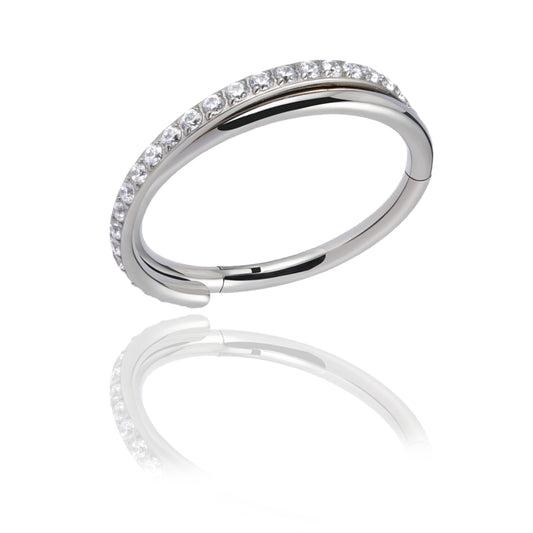
To limit the risk of irritation, opt for a reliable material, a good size, and a smooth finish. At Naald, we recommend ASTM F-136 titanium for its comfort, lightness, and excellent tolerance.
You can discover our complete collection here: all our ASTM F-136 titanium piercing jewelry.
Want to find comfortable jewelry after pregnancy?
Once the area has stabilized, choose reliable, well-sized jewelry suitable for your piercing.
See all our piercing jewelry
To go further
FAQ: Piercing and pregnancy
Can you get a piercing while pregnant?
It is not recommended. During pregnancy, the body is already under a lot of strain, and a new piercing adds a risk of infection, irritation, or complicated healing.
Can you keep a navel piercing during pregnancy?
Sometimes yes, if it's old, well-healed, and comfortable. But if the skin pulls, reddens, thins, or becomes painful, you should seek advice and consider removing the jewelry.
Should you remove a nipple piercing during pregnancy?
Not always during pregnancy, but you need to monitor changes in your breasts. If the jewelry becomes too short, pulls, or causes discomfort, seek advice. If breastfeeding, the jewelry must be removed before each feeding.
Can you breastfeed with a nipple piercing?
Breastfeeding may be possible, but the jewelry must be removed before each feeding to avoid the risk of injury or accidental ingestion. Consult a healthcare professional if you have any doubts.
When can you get a new piercing after pregnancy?
It's best to wait until your body stabilizes, fatigue decreases, and breastfeeding is taken into account if you are breastfeeding. For nipples, it's preferable to wait until milk production stops before repiercing.
What jewelry should you choose after pregnancy?
After validation by your piercer, choose well-sized, comfortable jewelry made from a reliable material, such as ASTM F-136 titanium.
Conclusion
Piercings and pregnancy are not incompatible, but they require caution. A new piercing should be avoided during this period, while an old piercing can sometimes remain in place if it doesn't cause discomfort.
The most important thing is to listen to your body: if a piece of jewelry pulls, itches, compresses, reddens, or becomes painful, do not force it. Seek advice and always prioritize your comfort and health.
After pregnancy, when your piercing is stabilized and changing it is possible, you can choose comfortable and reliable jewelry from our collection of ASTM F-136 titanium piercing jewelry.
Sources