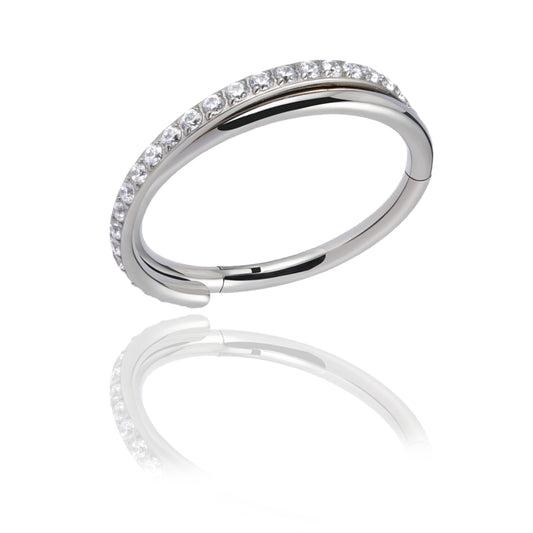
How to choose a piercing if the symbol matters to you?
If you're drawn to the idea of an anti-stress piercing, the best approach is to consider it an aesthetic and personal choice, rather than a promise of results.
Ask yourself the right questions:
- Do I like this piercing even if it doesn't change anything about my stress?
- Does my anatomy allow for this piercing?
- Am I prepared to follow the healing process?
- Am I likely to play with the jewelry when I'm anxious?
- Do I want a discreet, visible, symbolic, or decorative piercing?
- Am I willing to choose appropriate jewelry rather than just aesthetic jewelry at first?
The best piercing will be one you like, that suits your anatomy, that can heal properly, and that you won't regret if the expected anti-stress effect doesn't appear.
If you're interested in the symbolism of piercings, our dedicated guide on what piercings say about you and what they represent might appeal to you.
Daith or tragus: should you choose based on the acupuncture point?
You can discuss it with your piercer, but you need to be realistic. A professional piercer first assesses the anatomy, feasibility, angle, jewelry, and healing. They should not promise a medical effect.
If your main goal is migraines, anxiety, or depression, start with medical advice. If your goal is also aesthetic and symbolic, the piercing can be considered as a personal choice, but not as a treatment.
What jewelry to choose after healing?
The jewelry plays an important role in comfort. Poorly adapted jewelry can become a source of irritation, especially if you tend to touch it often.
To prioritize
- a reliable and well-tolerated material;
- a size adapted to the location;
- a stable shape that doesn't move too much;
- a smooth and well-polished finish;
- a reliable clasp system;
- jewelry that you enjoy wearing without needing to manipulate it.
At Naald, we favor ASTM F-136 titanium for its lightness, excellent tolerance, and comfort. For a healed piercing, or after validation by your piercer, you can discover our collection of ASTM F-136 titanium piercing jewelry.
Choose jewelry that truly reflects you
Daith, tragus, helix, conch, lobe, nose, navel, or nipple: find reliable, comfortable, and suitable jewelry for your piercing.
See all our piercing jewelry
To go further
FAQ: anti-stress piercing
Which piercing is supposed to help with stress?
The most cited piercings are the daith, Shen Men, tragus, or sometimes the conch. They are associated with certain areas of the ear used in approaches like acupuncture or auriculotherapy. But their effectiveness against stress is not scientifically proven.
Does the daith piercing really help with anxiety?
To date, the evidence remains mostly anecdotal. Some people report feeling better, but this may come from the placebo effect, the symbol of the piercing, or the relationship with the body. The daith should not replace medical treatment for anxiety.
Can a piercing help with depression?
A piercing can have personal, aesthetic, or symbolic value, but it does not treat depression. If you feel persistently sad, exhausted, anxious, or in difficulty, it is important to seek help from a healthcare professional.
Does the Shen Men piercing work against stress?
The Shen Men is often presented as a relaxation point in auricular acupuncture. Some people report a positive effect, but scientific evidence is lacking. It should therefore be considered a personal choice, not a guaranteed solution.
Is it dangerous to get a piercing to manage stress?
The danger mainly comes from unrealistic expectations or a piercing performed under poor conditions. Like any piercing, there are risks: pain, irritation, infection, poor healing, or a reaction to the jewelry. Choose a reputable piercer and suitable jewelry.
Can you play with your piercing when you're stressed?
It's best to avoid it, especially during healing. Touching or twisting the jewelry can irritate the channel, slow down healing, and promote the formation of irritation bumps. If you're looking for an anchoring gesture, choose an alternative that doesn't involve the piercing.
What jewelry should you choose for a daith, tragus, or conch piercing?
The choice depends on the location, your anatomy, and the healing stage. After validation by your piercer, opt for well-sized, well-polished jewelry made from a reliable material like ASTM F-136 titanium.
Conclusion
An anti-stress piercing can have real personal value: aesthetic, symbolic, identity-related, or emotional. For some people, it marks a stage, a change, a regaining of confidence, or a way to feel more at home in their body.
However, one should not attribute medical power to it that it does not possess. The daith, Shen Men, tragus, or conch are sometimes associated with stress, anxiety, or migraines, but the evidence remains limited and often anecdotal.
The best choice is therefore to view piercing as a personal project above all else. Choose it because you like it, because it suits you, and because it can be done correctly. For the rest, maintain a cautious approach: a good piercer, good healing, and reliable jewelry when a change is possible.
Once your piercing is stable, you can choose comfortable and durable jewelry from our collection of ASTM F-136 titanium piercing jewelry.
Note: this article is for informational purposes. A piercing does not replace medical advice, psychological follow-up, or treatment. In cases of significant anxiety, depression, crisis, or distress, seek help from a healthcare professional.
Sources