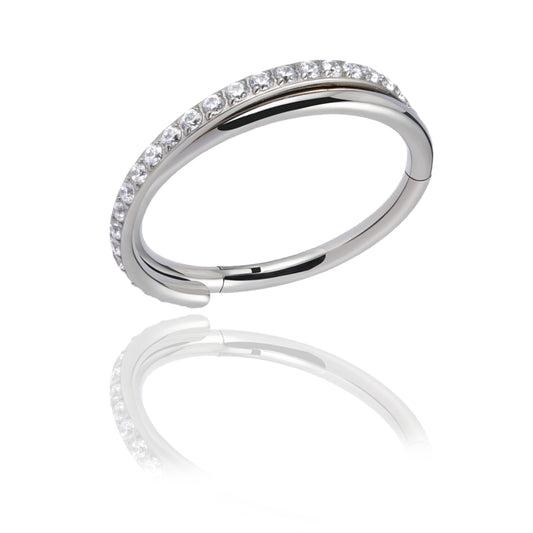
Hair oil bath and piercing: preventing the jewelry from unscrewing

Rédigé par : Naald Piercing | Dernière mise à jour : 20 Jun 26
Updated: June 20, 2026
Written by: Jean-Philippe
Reviewed by: Chloé, professional piercer

Hair oil bath and piercing: the detail that can cause your jewelry to fall out

A hair oil bath, coconut oil, hair serum, or nourishing oil can do a lot of good for your hair length. But if you wear piercings, especially on your ears, there's a risk we rarely think about: oil can facilitate the unintentional unscrewing of jewelry.

The problem isn't just the oil itself. It mostly comes from the combination of oil, hair, friction, towels, pillows, headphones, fingers in the hair, and threaded jewelry. Little by little, a cap can loosen, then fall off without you even realizing it.

This article explains why this happens, which piercings are most affected, what to do before and after an oil bath, and how to avoid losing jewelry during your hair care routine.

Is your ear piercing healed and you're looking for reliable jewelry?
Choose well-fitting, comfortable jewelry that suits your placement. Discover our selection of titanium ear piercing jewelry.

In 20 seconds

  • Oil is a lubricant: it can get around the jewelry and facilitate micro-movements.
  • The most affected piercings are those close to the hair: lobe, helix, flat, conch, tragus, rook, daith, or industrial.
  • Threaded jewelry can gradually loosen, especially with friction.
  • Do not remove a new piercing "just for the duration of the treatment": the hole can close quickly.
  • Before and after an oil bath, check your jewelry in a few seconds, without forcing it.
  • After the treatment, gently wipe the jewelry and avoid sleeping with very oily hair against the piercing.

Summary

Evaluation de notre boutique :

Why can an oil bath cause a piercing jewel to fall out?

Hair oil, coconut oil, castor oil, or a hair serum can leave a slippery film on the skin, hair, and jewelry. On a piercing, this film can encourage small movements that go unnoticed.

The risk increases especially if your jewelry has a threaded end. The oil can deposit near the screw thread, while hair, hands, towels, or pillows create repeated friction. Result: the end cap can gradually loosen.

The real problem: oil + friction + threaded jewelry

In most cases, the jewelry doesn't fall off "all at once" when applying the oil. It rather loosens in stages:

  • oil deposits around the jewelry;
  • hair gets around the end cap;
  • the towel or fingers rub the area;
  • the jewelry turns slightly;
  • the end cap gradually unscrews;
  • the jewelry eventually falls off, sometimes several hours later.

This is why checking after the oil bath is as important as checking before.

Which piercings are most affected?

All piercings can be affected if oil directly touches a threaded piece of jewelry. But the risk is more frequent in areas close to hair, towels, caps, headphones, or pillows.

Piercing Why it's exposed Useful precaution
Lobe Hair, towel, pillow, earphones. Check ends after treatment.
Helix / flat Highly exposed to hair, brushes, headphones, and towels. Avoid oil dripping onto the cartilage.
Conch Possible friction with hair, earphones, or pillow. Wipe off excess oil around the jewelry.
Tragus / daith Area close to headphones and difficult to visually check. Gently check, without unnecessarily twisting.
Industrial Large bar exposed to hair and towels. Be careful of snags during rinsing and drying.
Nose / eyebrow Less exposed, unless oil runs towards the face. Avoid oily hands on the jewelry.

If your hair often snags on your piercings, you can also consult our article: hair and piercing, how to avoid snags.

Before an oil bath: good practices

Before applying oil to your hair, take a few seconds to secure your jewelry. This prevents most losses.

Pre-treatment checklist

  • Wash your hands before touching your piercings.
  • Check that the ends are securely tightened, without forcing.
  • Tie up or separate strands close to the piercings.
  • Apply oil avoiding the piercing area, especially if the piercing is new.
  • Avoid massaging directly around an ear piercing.
  • Do not remove a new piece of jewelry "just for the duration of the oil bath."
  • Keep a clean towel dedicated to the treatment.

Naald's tip: 10 seconds before the treatment is enough. Check, apply with caution, then avoid touching your jewelry with oily fingers.

After an oil bath: what to check

The riskiest moment is not always the application. It's often afterward: rinsing, towel drying, still oily hair, pillow, or headphones.

Post-treatment checklist

  • Rinse your hair without unnecessarily directing the oil towards the piercing.
  • Gently wipe the jewelry with a clean compress if oil has settled on it.
  • Recheck the ends, without forcing or unnecessarily turning the jewelry.
  • Avoid sleeping with very oily hair against an ear piercing.
  • Change or protect your pillowcase if your hair is still oily.
  • Be careful with headphones, hats, headbands, or earphones right after the treatment.

If your jewelry turns more easily than usual, wipe off the excess oil, wash your hands, then gently tighten the end if you know how to. If in doubt, ask your piercer for advice.

Oil bath and new piercing: increased caution

If your piercing is new or still healing, the goal is to limit unnecessary contact. Oils, hair care products, sprays, masks, creams, or serums should not be intentionally applied to the pierced area.

A healing piercing needs stability. Too much manipulation, product, or friction can irritate the area, slow healing, or promote a small irritation bump.

What to avoid

  • putting oil directly on or around the piercing;
  • twisting the jewelry to "make a product penetrate";
  • removing the jewelry during the treatment;
  • scratching scabs with hair or fingers;
  • sleeping on an ear piercing that is still delicate;
  • using a rough towel that snags the jewelry;
  • applying several hair products near the piercing on the same day.

For detailed care rules, consult our guide: piercing healing, rules to follow.

You've lost a piece of jewelry after an oil bath: what to do?

If your jewelry has fallen out, don't panic. But act quickly, especially if the piercing is new: some channels can close up quickly.

Good reflexes

  • Wash your hands before touching the area.
  • Do not force if the jewelry no longer fits easily.
  • Do not use an earring or unsuitable jewelry as a "temporary fix."
  • Avoid putting back dirty, damaged, or dropped jewelry without appropriate cleaning.
  • Contact your piercer quickly if the piercing is new.
  • Monitor for redness, pain, swelling, or unusual discharge.

If you have lost a piece of jewelry and don't know what to do, read our dedicated article: lost piercing jewelry, hole closing up: what to do?.

Which jewelry to choose to limit the risk of loss?

No piece of jewelry is impossible to lose, especially if it is handled, poorly tightened, or exposed to friction. But certain choices limit the risks in daily life.

To prioritize

  • a piece of jewelry well-adjusted to your piercing;
  • a reliable and well-tolerated material;
  • a secure clasp system;
  • a properly screwed or well-clipped end;
  • jewelry without overly snagging elements if you have long hair;
  • an appropriate size to avoid excessive movement.

To avoid if you often do oil baths

  • very thin chains close to the hair;
  • jewelry with very mobile pendants;
  • rings that are too large;
  • ends that you already know are difficult to secure;
  • jewelry that is too long and moves with the slightest friction.

For ear piercings, ASTM F-136 titanium is an excellent option: it is lightweight, comfortable, and well-tolerated. You can discover our selection of titanium ear piercing jewelry, or browse all our ASTM F-136 titanium piercing jewelry.

Lost a piece of jewelry or want a more reliable model?

Helix, lobe, tragus, conch, rook, or daith: choose a titanium ear jewelry, well-suited to your piercing.

See titanium ear jewelry

Hair, hair care and piercing: other situations to monitor

Oil baths are not the only hair treatments to monitor. Anything that adds grease, texture, fragrance, alcohol, or residue near a piercing can irritate or encourage manipulation.

Products to use with caution near a piercing

  • coconut oil;
  • castor oil;
  • argan oil;
  • hair serum;
  • hair mask;
  • styling spray;
  • hairspray;
  • leave-in cream;
  • dry shampoo;
  • fragranced or very oily products.

The goal is not to stop your hair care, but to maintain a clear separation: your hair lengths on one side, your piercing on the other.

To go further

FAQ: hair oil bath and piercing

Can you do an oil bath with a piercing?

Yes, but with caution. Avoid applying oil on or around the piercing, especially if it's new. Check your jewelry before and after the treatment to limit the risk of unscrewing.

Is coconut oil dangerous for a piercing?

The main problem is not just coconut oil itself, but contact with a healing piercing or threaded jewelry. It can leave an oily film, encourage manipulation, and facilitate the loosening of a cap.

Why does my piercing fall out after hair care?

Oil, hair, towels, and friction can slightly twist a threaded end. The jewelry can then loosen little by little, and then fall off several hours after the treatment.

Should I remove my piercing before a hair oil bath?

No, especially if the piercing is new. The hole can close quickly, and reinserting it can be difficult or irritating. It's better to protect the area and avoid applying oil there.

What should I do if oil touches my piercing?

Gently wipe off the excess with a clean compress. Do not twist the jewelry unnecessarily. If the piercing is new or irritated, follow your piercer's advice and avoid using too many products.

Which piercing is most exposed to oil baths?

Ear piercings are the most exposed: lobe, helix, conch, tragus, flat, rook, daith, and industrial. They are close to hair, towels, pillows, and headphones.

How can I avoid losing a piercing jewel?

Regularly check the ends, avoid friction, keep hair away from the jewelry during care, wipe off oil after application, and choose well-fitting jewelry.

My jewelry fell out and I can't put it back in, what should I do?

Don't force it. Wash your hands, keep the area clean, and contact your piercer quickly, especially if the piercing is new. Forcing it can irritate or injure the channel.

Conclusion

A hair oil bath is not incompatible with piercings. But if you wear threaded jewelry, especially in the ear, you need to adopt a simple routine: check your ends before and after the treatment.

Oil can facilitate micro-movements, hair can catch, and an end can loosen silently. By keeping your hair products away from the piercing, avoiding manipulation, and checking your jewelry, you significantly reduce the risk of loss.

And if you need to replace a piece of jewelry or choose a more comfortable model, discover our collection of titanium ear piercing jewelry, selected to combine style, comfort, and quality.

Sources